
Historical, Warrior, Woman
Grace O’Malley did not inherit power quietly. She took it by force, by seamanship, and by refusal to yield.
Born into the Ó Máille dynasty on Ireland’s western coast, Grace was raised on ships, not in courts. When her father died, she assumed leadership by land and sea despite having a living brother. She commanded fleets, led raids, controlled trade routes, and ruled coastal territory through reputation and leverage. English authorities called her a pirate. Her people called her their lord.
Marriage expanded her reach, but her authority was her own. She commanded crews, negotiated alliances, and defended her holdings against rivals and English governors alike. When her sons and half-brother were imprisoned by the English Crown, Grace did not beg through intermediaries. She sailed directly to England and confronted Queen Elizabeth I face to face, negotiating as an equal.
She spoke plainly. She made demands. She secured results.
Grace O’Malley represents adaptive leadership. She fought when needed, negotiated when it served her, and never confused diplomacy with submission.
This workout honors command under chaos.
Strength with endurance.
And the ability to hold control while everything moves.
THE WORKOUT
“QUEEN OF THE WEST”
For time. Command pace. Ruthless transitions.
Part A
30 Clean & Jerks (135/95 lb)
(This is GRACE. Unbroken if you can. Strategic breaks if you must.)
Immediately into
Part B – 4 Rounds:
- 400m Run
- 20 Kettlebell Swings (53/35 lb)
- 15 Sit-Ups
Rules:
- You may not rest more than 30 seconds between movements.
- If you exceed 30 seconds, add 5 Burpees before continuing.
- Clean & jerks must be crisp. Sloppy reps don’t count.
Intent:
GRACE tests raw power.
This tests what happens after power is spent.
Leadership doesn’t stop when you’re tired.
Control doesn’t disappear when conditions shift.
You finish the job, then keep moving.
Just like she did.
Historical, Soldier, Warrior
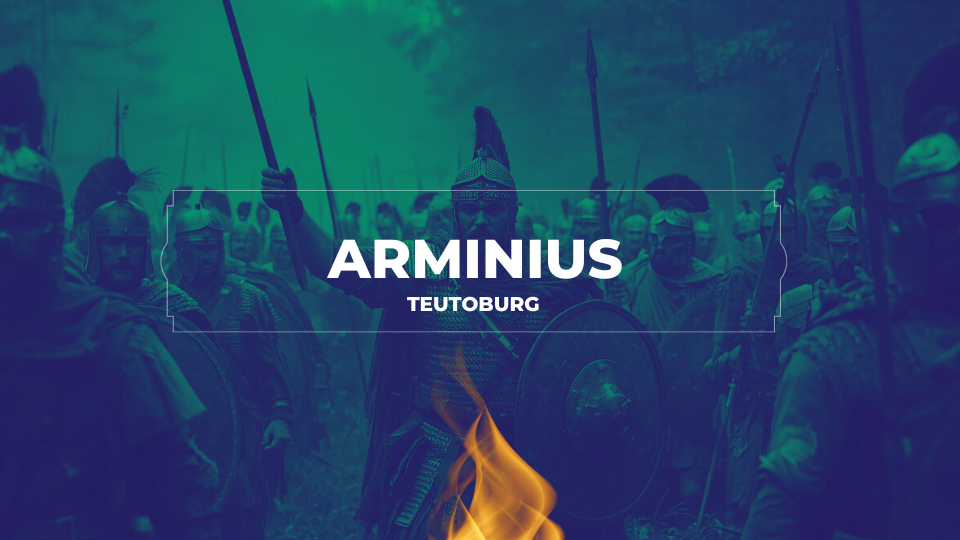
Arminius beat Rome at its own game.
Raised and trained by the Roman Empire, Arminius learned their tactics, discipline, and command structure from the inside. Rome thought he was an ally. He was quietly becoming their worst mistake.
In 9 AD, Arminius lured three Roman legions deep into the Teutoburg Forest. Narrow trails. Endless rain. Broken formations. Over several days, Germanic warriors ambushed, isolated, and annihilated Rome’s finest troops. Nearly 20,000 soldiers were wiped out. Eagles lost. Commanders killed. Total collapse.
This was not brute force. It was patience, deception, terrain mastery, and timing. Arminius didn’t outfight Rome. He outthought them.
The impact was permanent. After Teutoburg, Rome abandoned any serious attempt to conquer Germania east of the Rhine. The empire that crushed nations simply stopped advancing. One man changed the map of Europe.
Arminius was later murdered by rival chiefs, proof that internal conflict often ends what external enemies cannot. Still, his legacy stands.
This workout honors controlled chaos.
Calculated pressure.
And the ability to break a stronger force by never letting them settle.
THE WORKOUT
“TEUTOBURG”
For time. Tactical. No rhythm allowed.
6 Rounds:
- 400m Run
- 20 Wall Balls (20/14 lb)
- 15 Toes-to-Bar
- 10 Bar-Facing Burpees
Rules:
- Change your run pace every round (fast, moderate, controlled, repeat).
- Break the wall balls whenever needed, but never stop moving.
- No touch-and-go on burpees. Reset every rep.
Intent:
This workout never lets you settle into comfort.
Heart rate spikes. Grip fades. Breathing gets sloppy.
That’s where discipline matters.
Stay composed. Manage effort.
Apply pressure without panic.
Rome didn’t adapt.
You have to.
Historical, Warrior
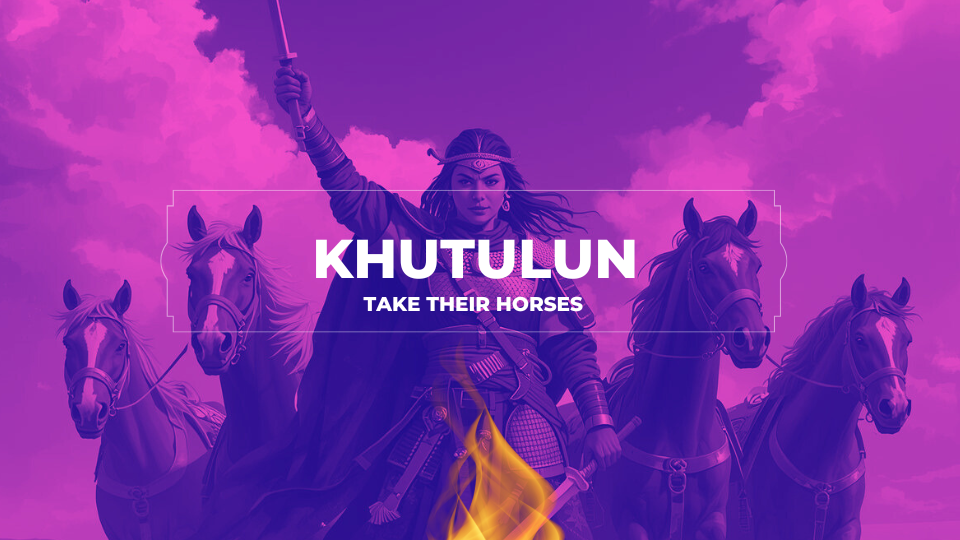
Khutulun didn’t ask for respect. She took it.
Born into Mongol royalty in the late 13th century, Khutulun was the daughter of Kaidu, a powerful rival of Kublai Khan. Unlike most noblewomen of her time, she was raised for war. She rode, fought, and trained alongside elite Mongol warriors and quickly proved she was stronger than most of them.
Her legend was built on wrestling. Khutulun challenged men to face her in combat and demanded horses as the price of defeat. Hundreds tried. None beat her. By the time the dust settled, she had accumulated a massive herd and an untouchable reputation. Skill, leverage, and ruthless conditioning made size irrelevant.
She wasn’t just an athlete. Khutulun rode into battle with her father, dragging enemies from their horses and breaking formations through sheer aggression. Contemporary historians like Marco Polo and Rashid al-Din recorded her not as a novelty, but as a serious military force.
Khutulun represents uncompromising capability. No gender politics. No symbolism. Just performance under pressure.
This workout honors physical dominance, grip strength, and the ability to overpower resistance without hesitation.
Earn every rep.
Take nothing for free.
THE WORKOUT
“TAKE THEIR HORSES”
For time. Strength-forward. Grip and control matter.
Buy-In
100 Double-Unders
(or 200 Single-Unders)
Then, 5 Rounds:
- 12 Power Cleans (135/95 lb)
- 15 Goblet Squats (heavy kettlebell or dumbbell)
- 20 Alternating Dumbbell Snatches (50/35 lb)
- 30m Heavy Farmer Carry
Cash-Out
Max Unbroken Hang Hold
Bar or rings. One break allowed. When you drop, you’re done.
Intent:
This workout favors leverage, coordination, and the ability to impose force.
Grip fatigue will try to weaken you. Don’t let it.
Stand tall. Move aggressively.
If you lose control, you lose ground.
Khutulun didn’t give ground. Neither do you.
Historical, Warrior
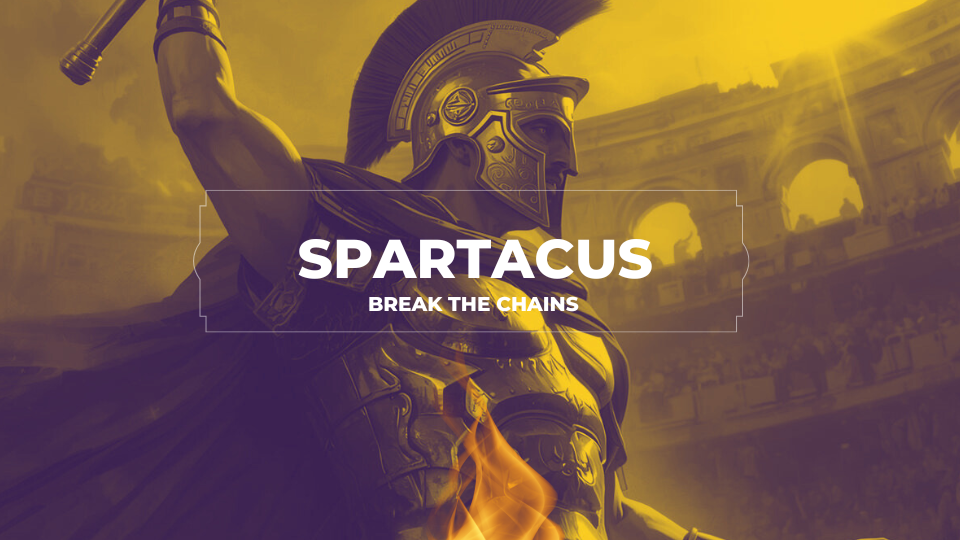
Spartacus was never meant to be owned. He was meant to be ;remembered, celebrated, respected.
Born in Thrace and sold into slavery, Spartacus was trained as a gladiator, a disposable weapon built for Roman entertainment. He was supposed to die in the sand for spectacle. Instead, he broke his chains and turned Rome’s cruelty against itself.
In 73 BC, Spartacus led a revolt that grew from a handful of escaped gladiators into a full-scale rebellion. Tens of thousands followed him. Not because he promised comfort, but because he proved freedom could be taken by force. He defeated Roman legions using stolen weapons, improvised tactics, and relentless movement. Again and again, Rome underestimated him. Again and again, he punished that mistake.
Historical records are fragmented and biased, written by the very empire he threatened. But one fact is undeniable. Spartacus was a disciplined commander, not a reckless brute. He trained fighters, enforced order, and adapted faster than Rome could respond.
The rebellion ultimately failed. Spartacus died in battle. But Rome never forgot him. They crucified thousands to erase the idea he unleashed.
This workout honors defiance under pressure.
Unity through effort.
And the refusal to accept chains, even when the cost is everything.
THE WORKOUT
“BREAK THE CHAINS”
For time. Team or solo. Relentless. No shortcuts.
Buy-In
60 Thrusters (95/65 lb)
Break these up as needed. Every set is earned.
Then, 4 Rounds:
- 25 Pull-Ups
- 30 Wall Balls (20/14 lb)
- 20 Push-Ups
- 400m Run
Cash-Out
100 Alternating Dumbbell Snatches (50/35 lb)
Optional Team Version (3–4 athletes):
- Thrusters and snatches split as needed
- Runs completed together
- Everyone finishes the final rep
Intent:
This workout starts heavy and only gets harder.
You’ll feel boxed in. Fatigue will stack.
That’s the point.
Move as a unit. Control the chaos.
Don’t rush. Don’t fracture.
Hold the line until the chains break.
Historical, Warrior
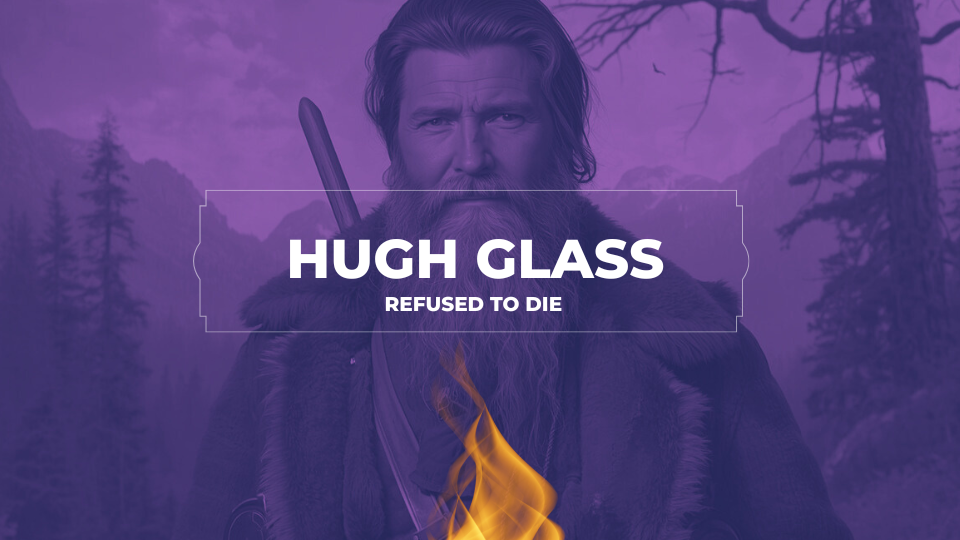
Hugh Glass wasn’t powerful. He wasn’t protected. He didn’t win because conditions improved.
He survived because quitting never entered the equation.
In the early 1800s, Glass was a frontiersman pushing deep into hostile wilderness when a grizzly bear tore him apart. Bones crushed. Flesh ripped open. Barely alive. His companions assumed death was inevitable and left him behind with nothing. No weapons. No food. No shelter.
Glass refused to die.
With injuries that should have ended him, he crawled, dragged, and staggered more than 200 miles through brutal terrain toward Fort Kiowa. He set his own wounds. He ate what he could find. He endured cold, infection, starvation, and pain most people can’t imagine for five minutes, let alone months.
His story was first recorded years later and may be embellished. That doesn’t matter. What matters is the principle behind it.
Progress without comfort. Survival through movement. Discipline when every excuse exists to stop.
This workout honors raw resilience.
No speed. No glory.
Just keep moving until you’re still standing.
The Workout
“REFUSE TO DIE”
For time. Long. Grinding. No comfort.
Buy-In
800m Bear Crawl (or 400m if space limited)
Then, 5 Rounds:
- 20 Deadlifts (moderate, something you shouldn’t enjoy by round 3)
- 30 Walking Lunges (bodyweight or holding dumbbells)
- 15 Push-Ups (scale to knees or incline, but keep moving)
- 200m Run or 250m Row
Cash-Out
Max-distance Carry in 10 minutes
Farmer carry, sandbag, or odd object
Put it down when you must. Pick it back up immediately.
Intent:
This is not fast.
This is not pretty.
This is about forward motion under fatigue.
If you stop, you don’t quit.
You breathe.
Then you move again.
Exactly like Glass did.
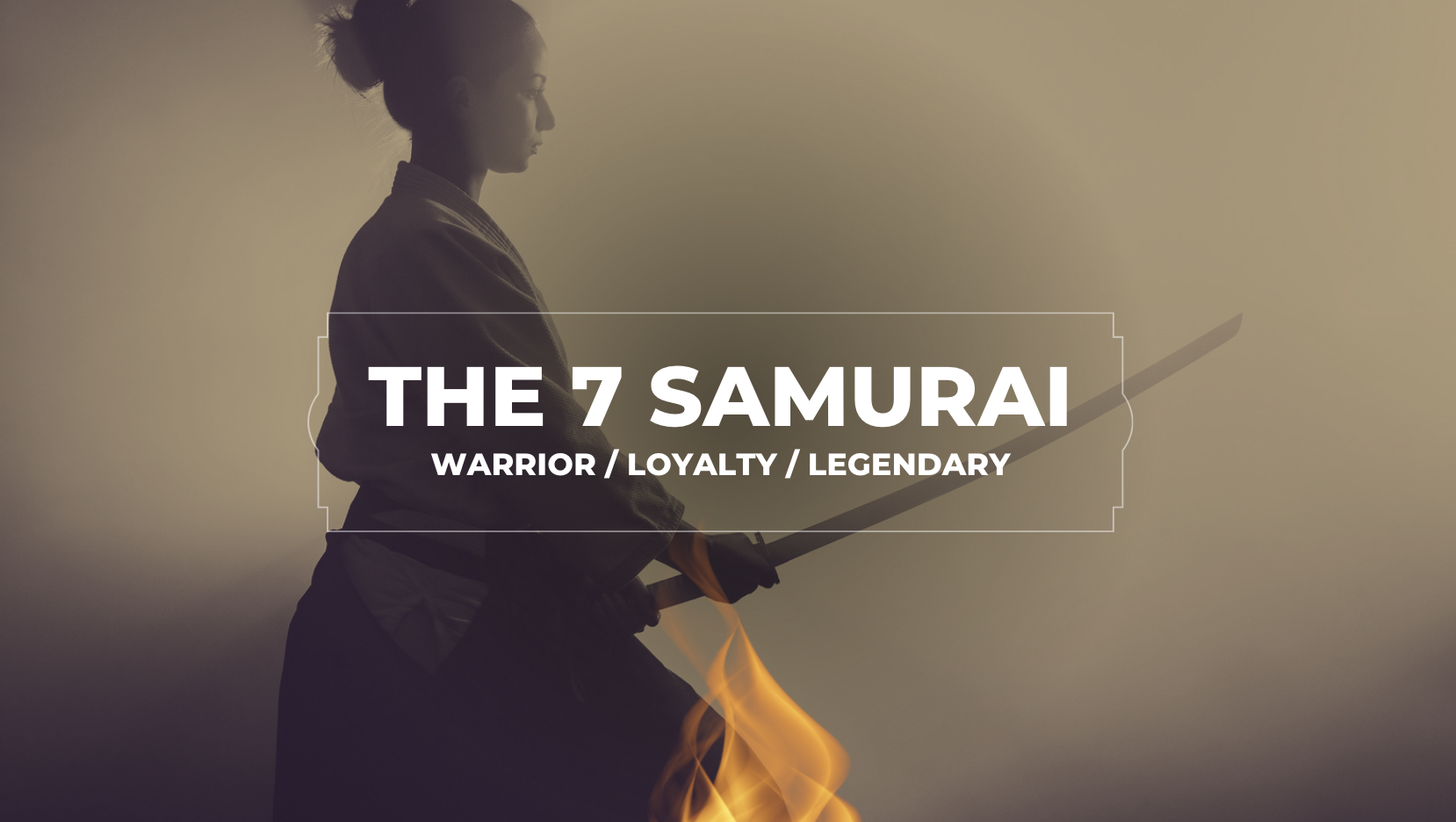
Historical, Warrior
“The Seven Samurai” is a classic Japanese film directed by Akira Kurosawa, released in 1954. Set in feudal Japan, the story revolves around a group of seven skilled and diverse samurai warriors who are hired by a village to defend it from marauding bandits. The film explores themes of honor, sacrifice, camaraderie, and the blurred lines between heroism and villainy.
As the samurai train the villagers in combat and strategy, they form deep bonds and confront their own personal demons. The film is renowned for its masterful direction, character development, and groundbreaking action sequences. “The Seven Samurai” has had a profound influence on cinema and storytelling, inspiring numerous adaptations and paying homage to its timeless themes of courage and unity in the face of adversity.
The Workout
7 Rounds For Time:
7 Hand Stand Push-ups
7 Thruster at #135
7 knees to elbows
7 DL at #245
7 Burpees
7 KB swings
7 Pull ups
